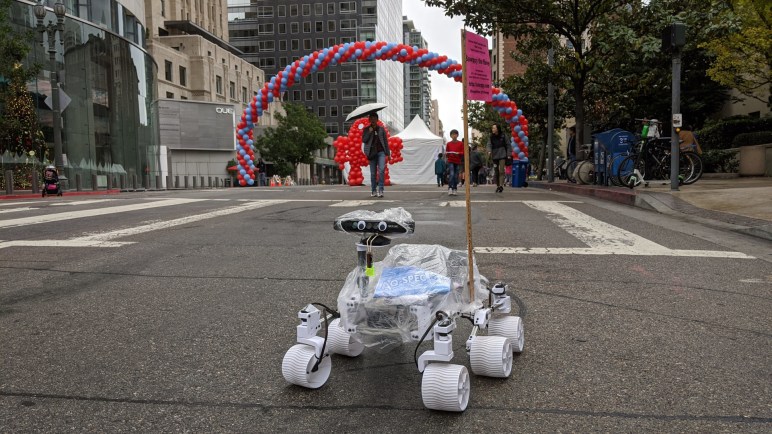
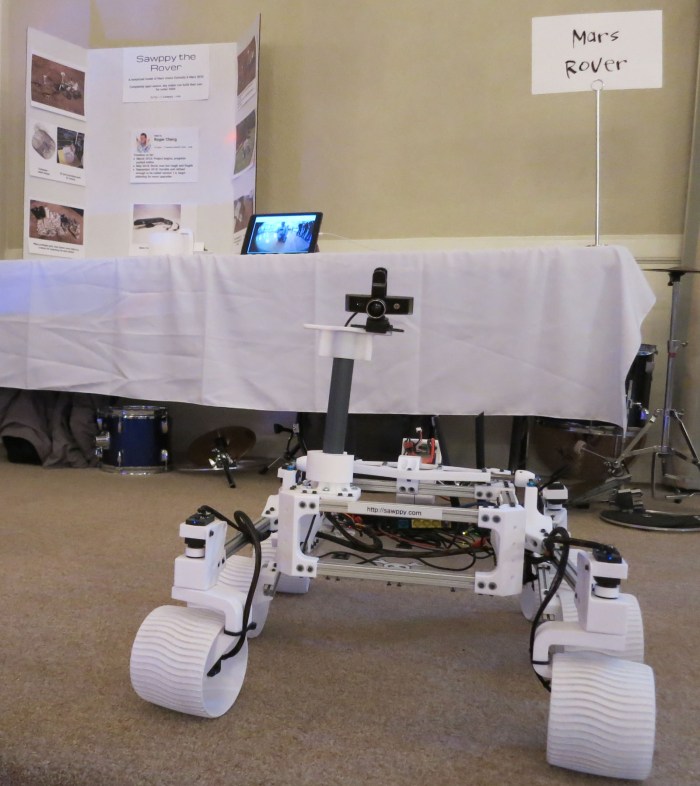
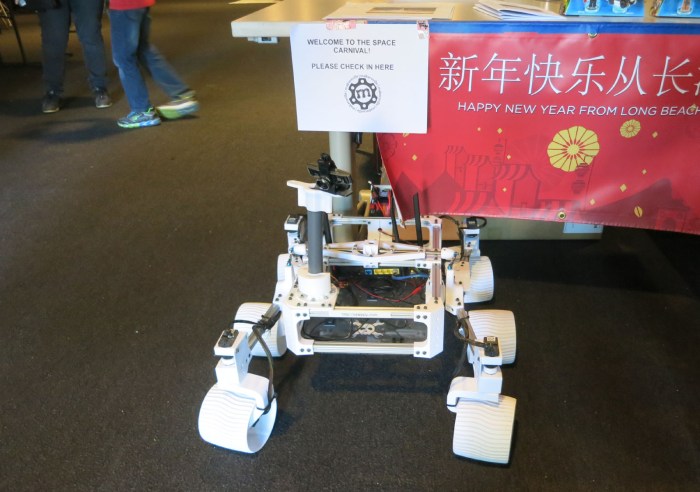
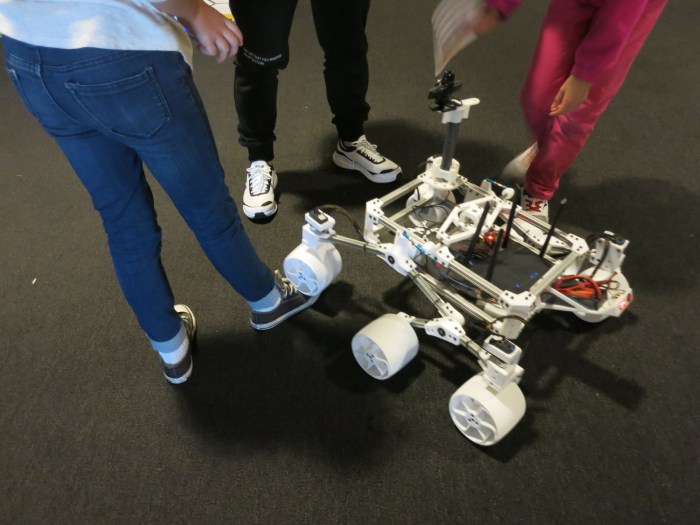
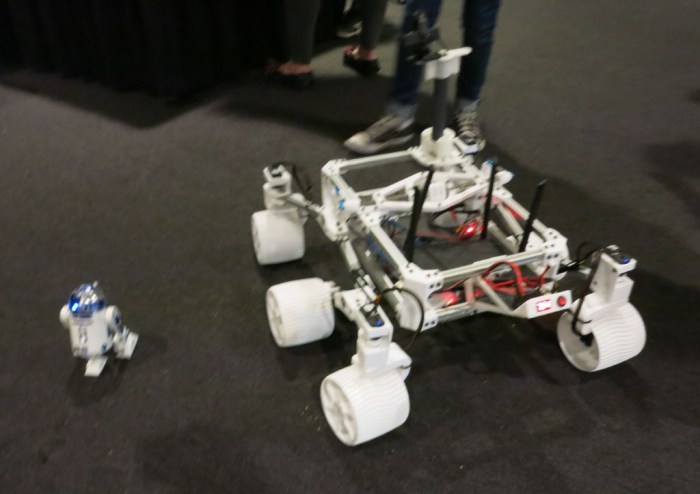
It’s always amazing to see what people bring to the Hackaday Superconference. I think the audience would appreciate my project Sawppy, but I didn’t bring my rover to Supercon for two reasons. First, Sawppy is somewhat unwieldy and bulky and second, I expect to be pretty busy as part of event staff helping out on badge logistics.
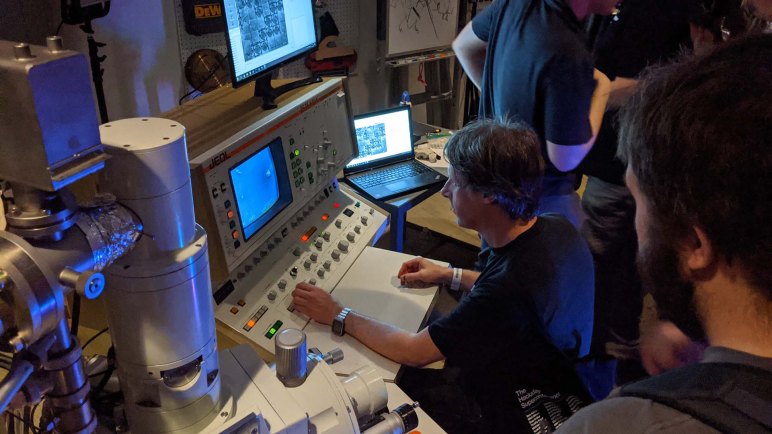
The second reason held true throughout the weekend, but I was put to shame on the first front because Adam McCombs (Twitter @nanographs) brought a scanning electron microscope. I never thought they were very portable and I was right, but that didn’t stop Adam! It occupied what little open space there was in the DesignLab shop area. I’ve seen SEM imagery and thought it might be fun to take a closer look, but what I didn’t realize was how cool it was to watch one in operation.
I never got time at the operator console, but I watched others turn knobs at their disposal. I had not known how many different parameters were adjustable to highlight different features on the sample. When we see a published picture generated from a SEM, an operator has already adjusted these knobs to the appropriate settings. Seeing less-than practiced operators adjust them live and experiment to see what works was mesmerizing.
I was also surprised at how feedback is visible immediately. It was explained to me the whole machine is a very analog process. The path from the electron beams striking the sample to picture on operator console CRT has no digital frame buffers or processing inserting delay. Every once in a while an image is recorded to the adjacent laptop, and that process consumes several seconds, but the knob-twiddling is effectively instantaneous on CRT as are interactions with the sample. I saw some small specs of dust dance around and initially thought it was due to air movement, but then I learned the sample is held in a vacuum. What is moving the dust? The electron beam!
My mind evaluates this technology from the perspective of an optical camera, and from that perspective the available range of magnification is astounding. Traversing several orders of magnitude of magnification with a single twist of a knob. I saw no indication that a SEM has any equivalent of focus or depth of field limitations: everything in the image is always razor sharp. I was not surprised to see panning across the sample, but I was surprised to see tilt was an option as well to see some items from different perspectives.
Watching a SEM in operation was not something I knew I needed to see until I saw it. The pictures afterwards are a great reminder, but no match for the live experience. The opportunity doesn’t come often, but if one is available I highly recommend it.








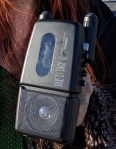 First of all, the promise of seeing strange things I never even knew existed was fulfilled in spades, products aimed at novel niches that I had been completely clueless about. One example: this is a portable Karaoke machine that can run off batteries and use cassette tape for music, but this is a duet machine with two microphones for you and your singing partner to maintain eye contact while you sing everlasting love to each other. I don’t Karaoke and I was fascinated there was enough demand for this product to exist.
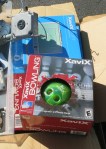 I also stumbled across this product: a bowling video game with a custom controller shaped like a bowling ball. If I understand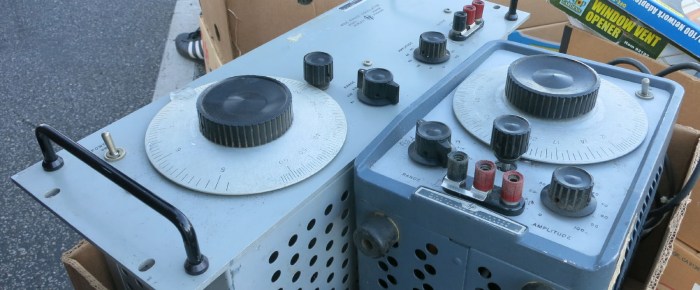



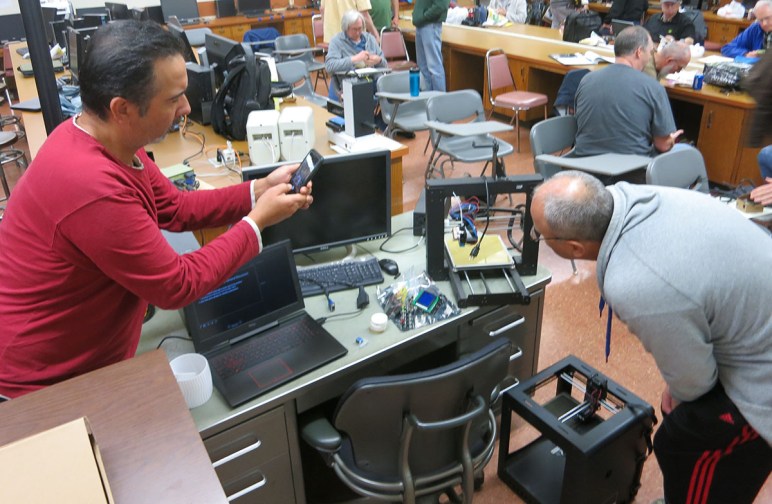

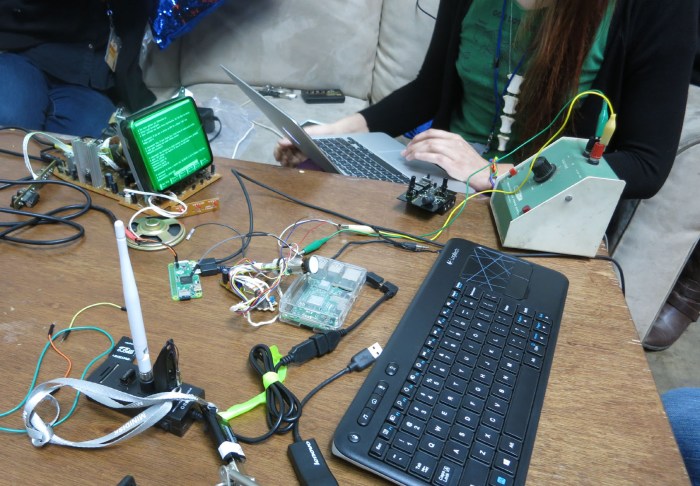
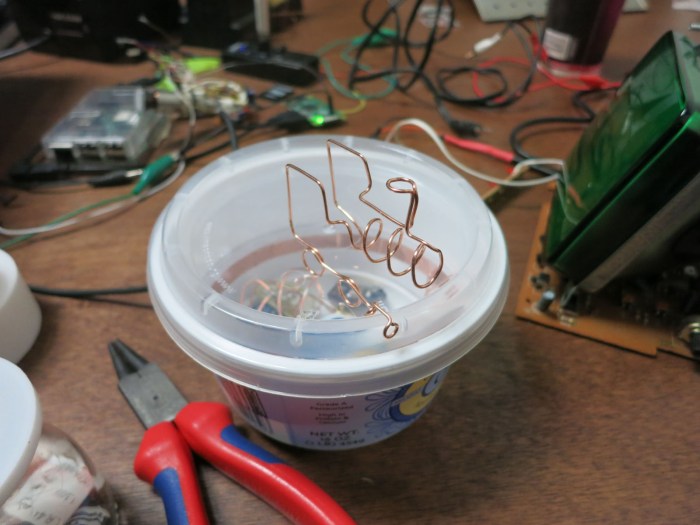
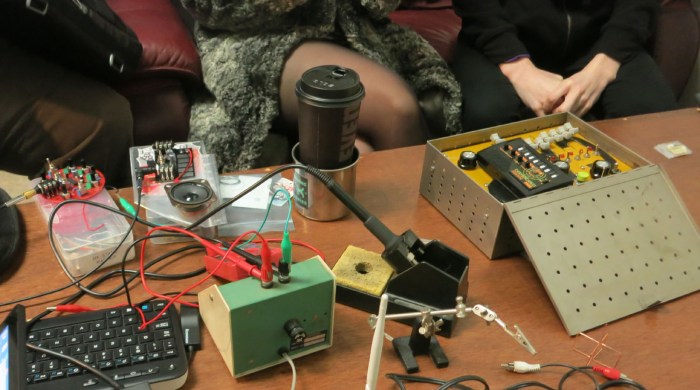
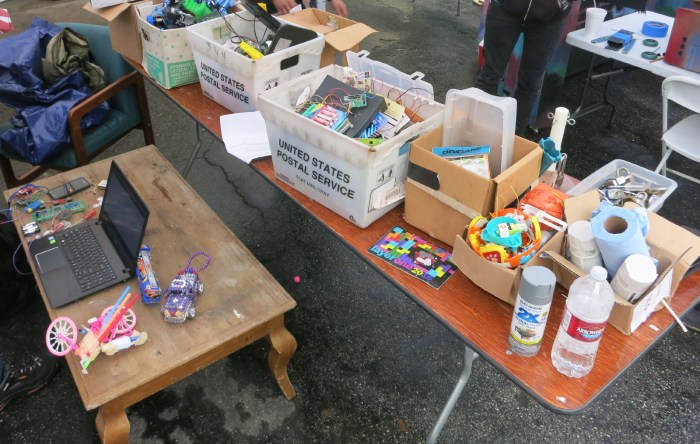



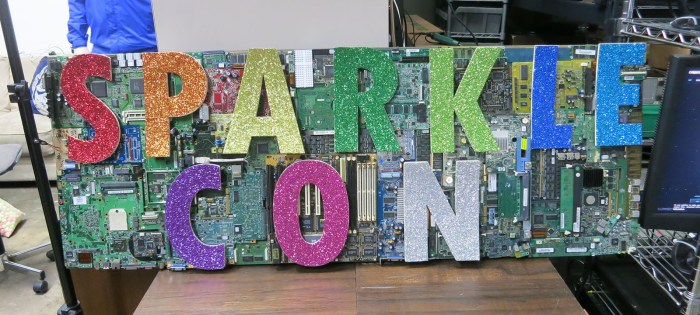
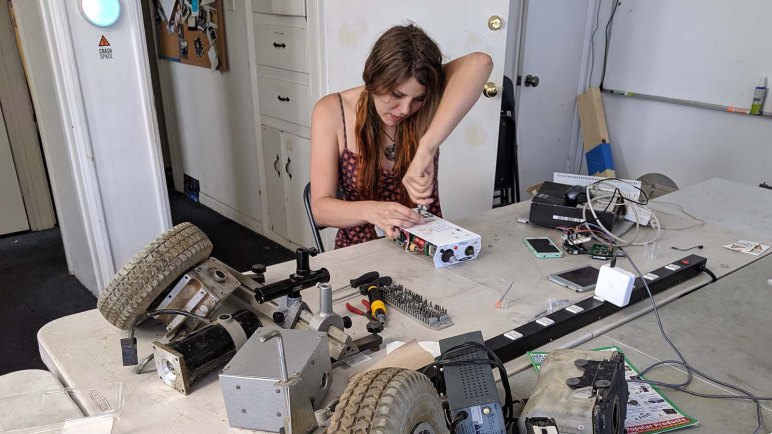
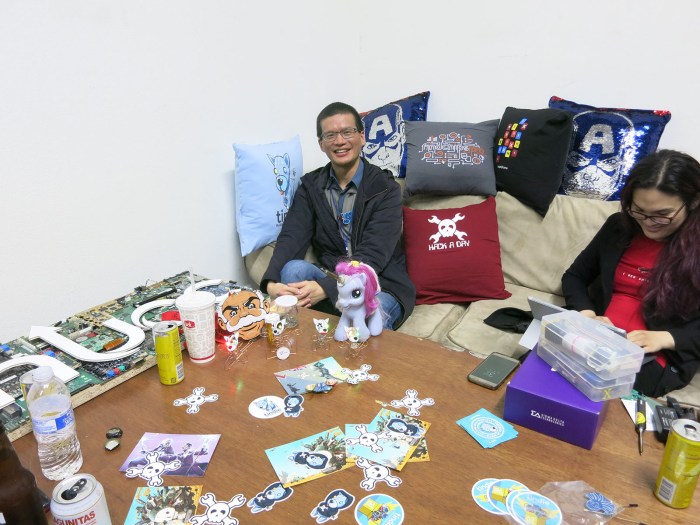 The table started the day empty, and there was a time when it was populated by scattered stickers, but towards the evening it became an electronics workshop. Here we can see multiple simultaneous projects underway.

 New Screwdriver