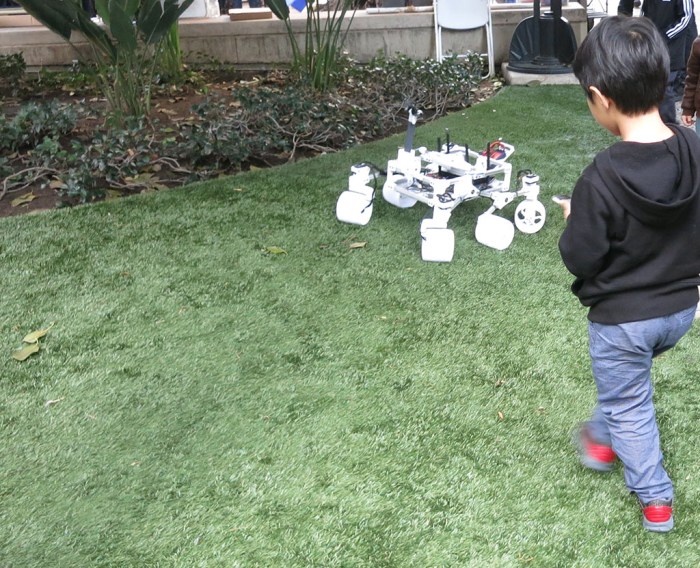
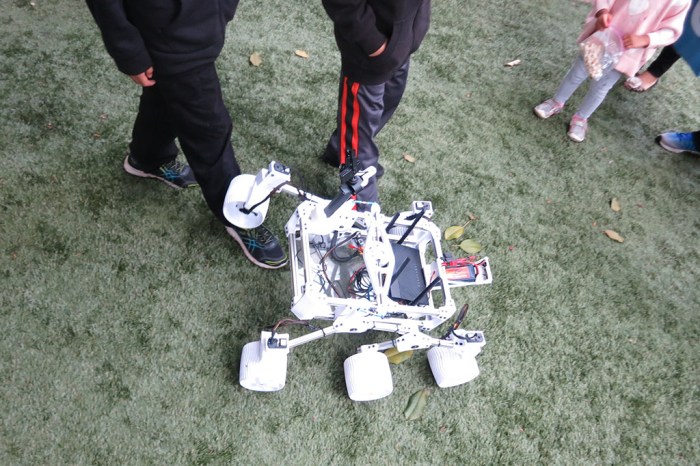
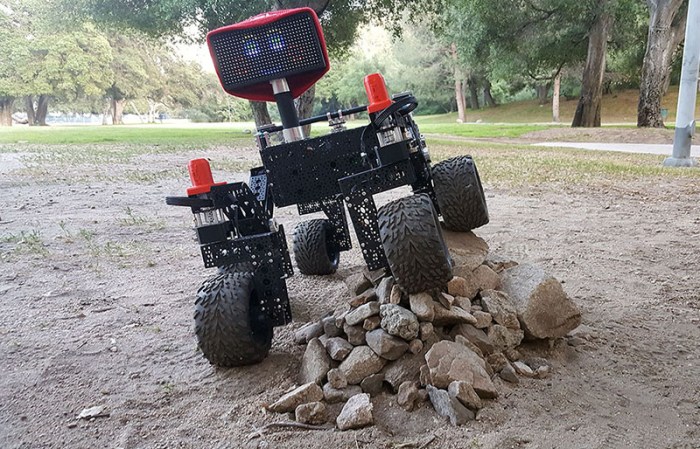
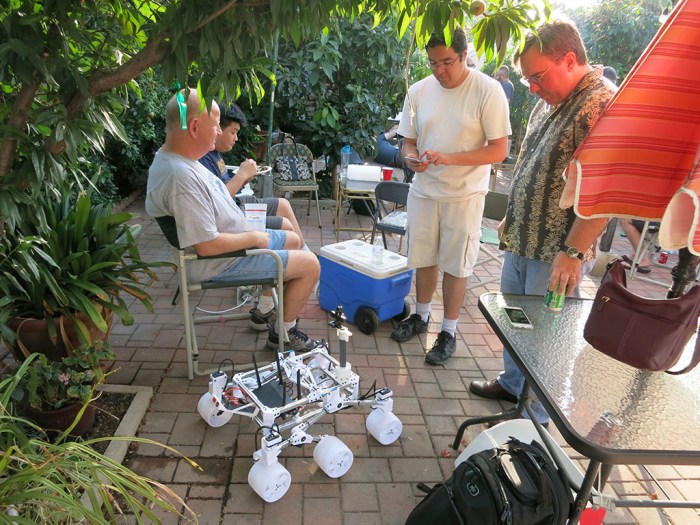
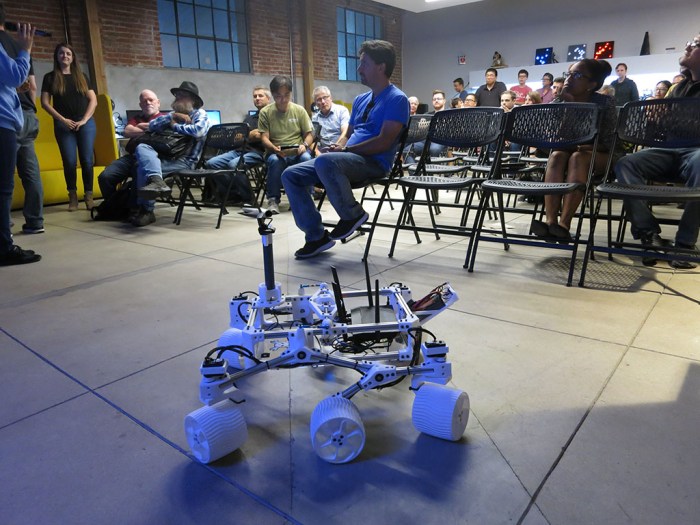
Today I introduced my rover project Sawppy to members of Robotics Society of Southern California. Before the presentations started, Sawppy sat on a table so interested people can come by for a closer look. My visual aid PowerPoint slide deck is available here.
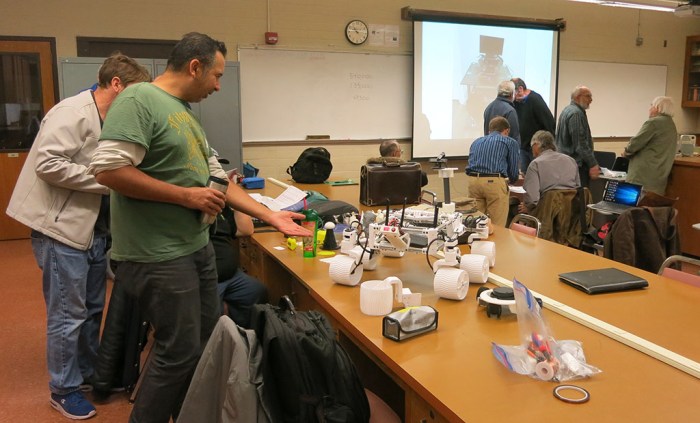
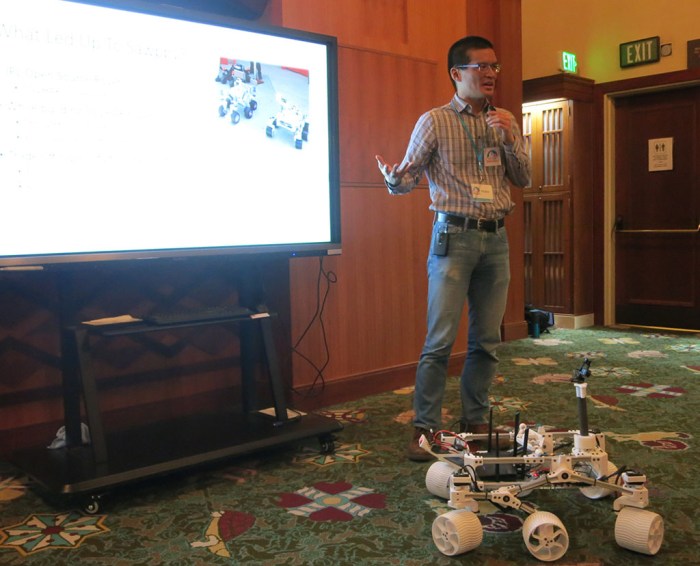
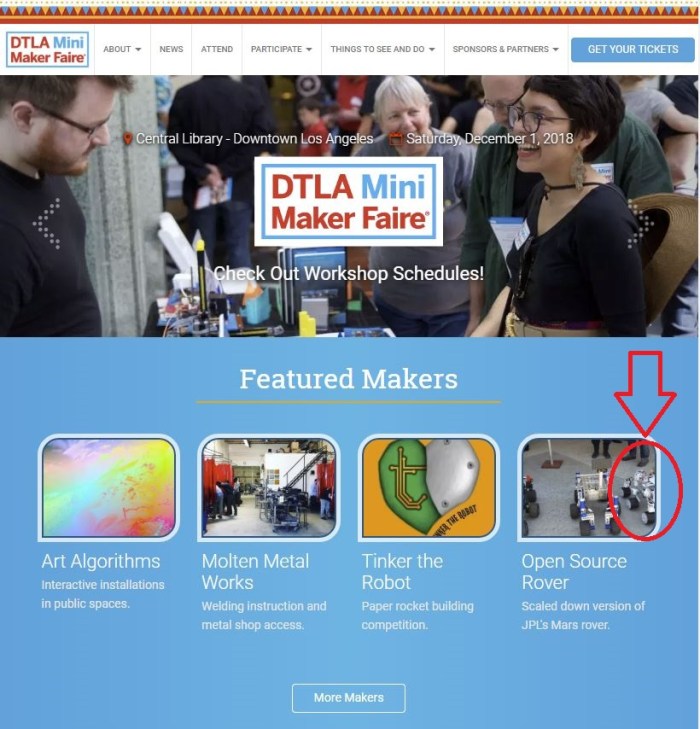
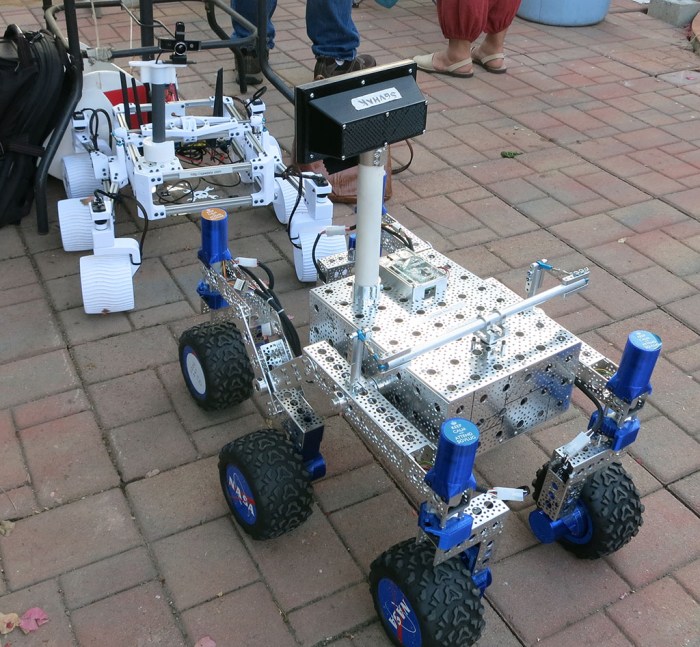
My presentation is an extended version of what I gave at Downtown LA Mini Maker Faire. Some of the addition came at the beginning: this time I’m not following a JPL Open Source Rover presentation, so I had to give people the background story on ROV-E, JPL OSR, and SGVHAK rover to properly explain Sawppy’s inspiration. Some of the addition came at the end: there were some technical details that I was able to discuss with a technical audience. (I’ll expand on them in future blog posts.)
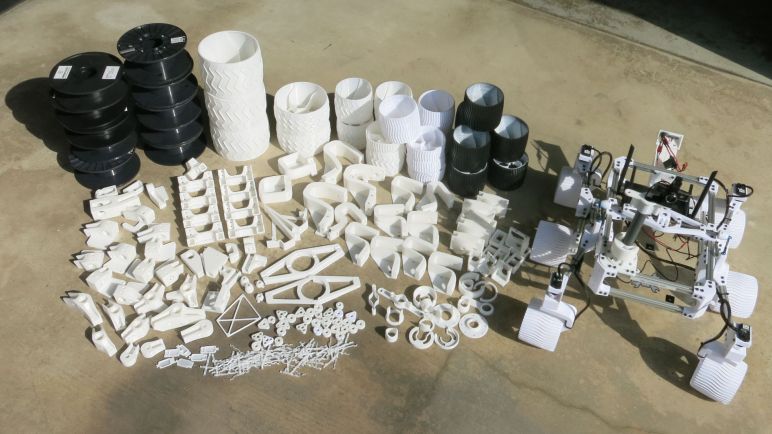
I was very happy at the positive reception I received for Sawppy. The first talk of the morning covered autonomous robots, so I was afraid the audience would look down at Sawppy’s lack of autonomy. Thankfully that did not turn out to be a big deal. Many were impressed by the mechanical design and construction. Quite a few were also appreciative when I stressed my emphasis on keeping Sawppy affordable and accessible. In the Q&A session we covered a few issues that had easy solutions… if one had a metalworking machine shop. I insisted that Sawppy could be built without a machine shop, and that’s why I made some of the design decisions I did.
A few people were not aware of Onshape and my presentation stirred their interest to look into it. There was also a surprising level of interest in my mention of Monoprice Maker Select v2 as an affordable entry level 3D printer, enough hands were raised that I signed up to give a future talk about my experience.
(Cross-posted to Hackaday.io)

 And this bit of exposure might lead to other interesting projects down the line. It seems to have caught the eye of someone with interest in the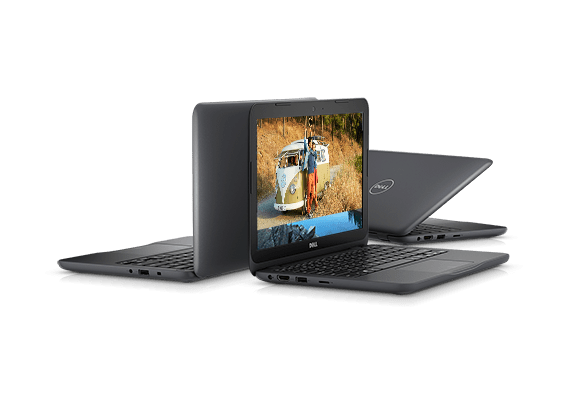
 As investigation into ROS continues, it’s raising concern that a self-contained autonomous robot will likely need a brain more powerful than a Raspberry Pi. It’s a very capable little computing platform and worked well serving as Sawppy’s brain when operated as a remote-control vehicle. But when the rover needs to start thinking on its own, would a little single-board computer
  The most obvious point of concern is the low power ARM CPU. The raw processing capability of the chip is actually fairly respectable, and probably won’t be the biggest problem. But there are two downsides with the chip:
 Back in January of this year I joined a team of pre-release beta testers for a project out of nearby Jet Propulsion Laboratory (JPL). While not exactly a state secret, we were asked not to overtly broadcast or advertise the project until after JPL’s own publicity office started doing so. This



 New Screwdriver